
20 suspected new species may have been discovered by local scientists during a recent, comprehensive deep-sea survey.
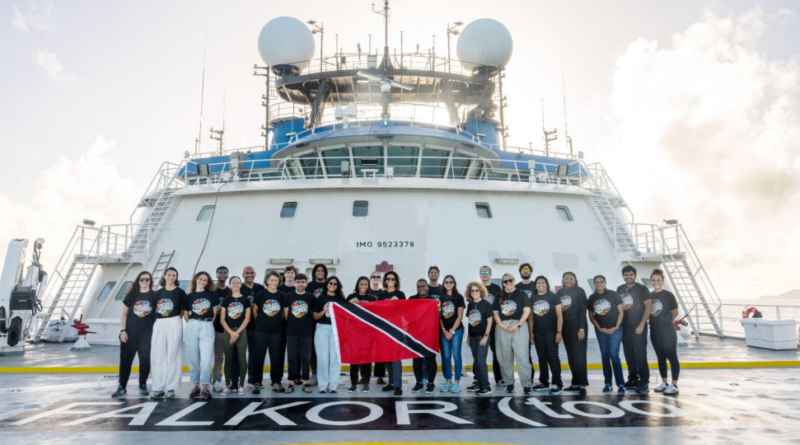
The expedition aboard Schmidt Ocean Institute’s R/V Falkor (too) was the first locally led deep-sea survey, running from June 29th to July 28th 2026.
During this time, the team led by Dr Diva Amon mapped approximately 13% of the country’s marine territory.
The potential new species include an octopus first discovered during a 2014 expedition, however the scientists at that time did not have the required data to confirm whether it was a new species.
They will be able to confirm this with the data collected this time around.
The team also discovered corals, carnivorous sponges, and squat lobsters, among other animals.
Over 700 specimens were collected, all of which will be housed at the Zoology Museum at the UWI St. Augustine, increasing the size of the museum’s deep-sea collection twelve-fold.
The scientists were also able to locate 219 bubble streams, indicators of possible cold-seep sites.
Powered by chemical energy such as methane bubbling from the ocean floor, cold seep ecosystems support marine life – including mussels, clams, and tubeworms – through chemosynthetic bacteria rather than sunlight.
The team used the bubble streams to visually confirm 25 cold seep ecosystems, the largest of which is half an acre and covered in mussels and tubeworms.
Dr Amon says all the data collected, from mapping to biological data, will contribute to future marine governance and spatial planning efforts within Trinidad and Tobago, including the establishment of marine protected areas.